Sunday, January 22, 2017

2nd Quarter Reflections

 2nd Quarter Reflections

Many in this world view the topic of reflection as one where you recall the most positive events that have shaped you for the better, but I view reflection as an unfiltered view into what you have realized about your past, both positive and negative, and that's what I would like this blog to be about. An unfiltered, sincere reflection of what has happened this year, what I have realized about the world and other facets of life, and how these could potentially shape the future. For each inquiry addressed in this blog, I will provide you, the reader, with my upmost most honest answer. This means no sugar-coating, no cherry-picking, etc. Enjoy!

In what area do you think you made your biggest improvements in English Language Arts?

 I do not believe I have made an immense amount of improvement this year, for I am still in the process of becoming aware of my greatest weak-points, but there has been multiple smaller difficulties that I have been able to eradicate. One of note is essay formatting. I am aware that I have listed this as a facet of improvement in past Reflections, but it is indeed facing ongoing improvement. Prior to the 2nd Quarter, I hadn't exhibited expertise in formatting whatsoever. My theses were unorganized, my structure was utterly mismatched, and my attention getters either were depicted as "boring", and/or "perpetual". But now that I have undergone vast improvement with the help of guidance, my formatting is much more clear and organized.


What is something you have accomplished since the new year that you are proud of?

In upmost honesty, I have proudly accomplished only an immensely small modicum of note this school year, let alone the Quarter. Pieces of literature I had believed to be rather well-written had been perceived as mediocre at best by my peers and educators. I would often let cockiness get the best of me, which is one of my greatest regrets. But I digress, if I were to pinpoint one accomplishment, this would be my improvement in formatting while writing, as it has made my writing somewhat better.

What has been the most challenging part of 2nd Quarter for you and what did/can you do to help overcome this?

Despite other insecurities/adversities I have faced, One of the most difficult aspects of the quarter is feeling monumentally inferior to my peers in Mrs. Larson's Accelerated Language Arts Class. Being unintelligent had been something rather difficult to accept this year, and being placed in a class of students whom do possess intelligence had been quite a drain on my self-esteem. I would often leave class distraught, as I witnessed my intelligent peers excel in their work, while I would have had nothing to offer the class. I still struggle with this to this day, which is why I have been devising ways to aviod letting my lack of intelligence deter me from progressing in school.

What have you learned about the world? 

One of the main lessons I have learned about the world is that not everyone is born with conventional intelligence. We will often brand others as being conventionally "unintelligent" or "idiotic", despite the possibility that we could qualify for one of these labels. While a very small percent of the general population would be considered "unintelligent" by conventional standards, people who indentify as belonging to this minority, such as I, will often feel as if we could never succeed, which is simply untrue. Success is measured in your determination, drive, and persistence, and really anyone could possess these qualities.

Thursday, January 12, 2017

TKAM Comparative Blog

To Kill A Mockingbird: Movie vs. Novel  

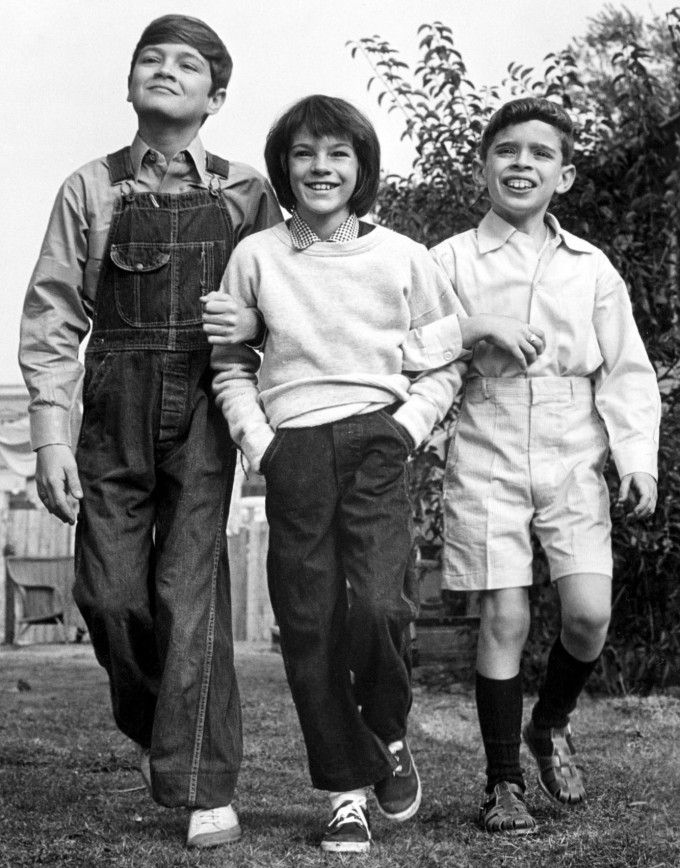
Over the past month, I have been reading the novel, "To Kill A Mockingbird", written by Harper Lee, and, I will say, this was no small literature assignment. Not only have I paid the book my full attention and thought, but I have even gone passed the novel's features, for I, as well as many others attending my class, have put the novel into analysis, and utilized the findings in poems, character comparisons, and connections to current world events. This has given me a great deal of understanding about the novel, making it rather simple to compare it to similar works, or in this case, the "To Kill A Mockingbird" film, released in 1962. In this blog, I will note the immensely emphatic differences between the acclaimed movie and the novel I was able to find, and how these differences impact the movie's plot and/or quality.

The biggest contrast I had found was one that comprised of a substantial number of smaller contrasts, and that is, the lack of minor characters in the movie. I was able to draw this observation from the following few absent characters:

1. Mrs Dubose- Mrs. Dubose may have had minimal page space, her impact in "To Kill a Mockingbird" was all but minor. Mrs. Dubose was a representation of Maycomb County's many thoughts on the Finch Family. From heckling Atticus about his newest client's race to degrading Scout's attire in a complacent manner, Mrs. Dubose stated not only her beliefs, but the beliefs that almost all of Maycomb held, making her impact that of note.

 But in lieu of this, Mrs. Dubose was next to absent in the film. We are only shown her heckling the Finch children as they walk down to Atticus, an event that may have happened in the book, but one that was far from one that represented her impact in the novel.

2. Dolphus Raymond- Another character that had a substantial affect on Maycomb's image and eventually the novel was a man by the name of Dolphus Raymond. Raymond was a rich, white man whom was soon to be wed, but his white fiancé had committed suicide, thus causing him to leave her for an African American woman. Maycomb's White Community shunned Raymond, as he had biracial children with this woman, which was seen as "sinful" and "immoral". Scout, Jem, and Dill later encounter Raymond in trial when Dill starts to feel sick from Atticus's Interrogation. It is later revealed that Raymond disguises Coca Cola as beer, for an alleged alcohol addiction would be easier for Maycomb Folk to understand why he made his choices.

Raymond was a living, breathing example of the oppression/discrimination many faced in Maycomb due to race and/or racial associations. His lie also highlighted Maycomb's concern with race, as opposed to other issues many of us deem as much more concerning, such as alcoholism. However, he is nowhere to be found in the film, which validates the observation made earlier.

3. Mr. Link Deas- Link Deas had also felt the need to combat racism in Maycomb, but unlike Raymond, he had taken a much more active role in standing up for African Americans in the community. During the trial, a voice could be heard showing support for Tom Robinson's case. This
 is then confirmed to be Deas. He also had provided Tom Robinson's wife, Helen, with employment when Tom had passed.

Link Deas was a representation of the scarcity of concern for racism in the community, for it is of note that almost every action or statement he had performed/made was met with ridicule. But despite this, he wasn't to make even a slight cameo in the movie, which is one of my final examples as to the absence of minor characters.

In light of these findings, it is safe to say that I believe that the novel had been able to convey the primary message slightly more sufficiently. This is due to the novel's utilization of minor characters, which gave the readers multiple examples of Maycomb Folks, and due to these character's complex storylines and ridicule, (or lack there of in few scenarios), from the general Maycomb population, the readers are more inclined to draw their own, individual conclusions about Maycomb and Racial bias/ prejudice. The film may have been able to get it's message across, but the lack of minor characters doesn't give the audience to come to rather complex, comprehensive conclusions about the city.

Friday, December 16, 2016

TKAM Found Poetry


"The Journaled Poems of Atticus Finch: Summer 1935" 

There's a lot of ugly things in this world.
White men cheat black men all the time,
he [Bob Ewell] is out of his mind,
The jury couldn't be expected to take Tom Robinson's words over the Ewell's
But they're still our friends and this is still our home.

I’m no idealist,
But in our courts, all men are created equal.
A defendant’s entitled to the shadow of a doubt.
You never really understand a person until you consider things from his point of view.

I just hope that Jem and Scout come to me for their answers.
When a child asks you something, answer them.
"Don't say nigger, Scout. That's common."
I hope they trust me enough.
They're all I’ve got.

But despite this, I have nothing but pity in my heart.
Mayella is the victim of cruel poverty and ignorance.
Stand in Bob Ewell's shoes for a minute.
Ignorance.


I commented on: Aine's Blog
I commented on: Kezia's Blog
I commented on: Eamonn's Blog


Thursday, December 8, 2016

Maycomb Representation Photo Analysis


I believe this photo captures what Maycomb, the fictional city of the novel "To Kill A Mockingbird" by Harper Lee, could have looked like if it was existent due to the strong correlation between the characteristics described in both the novel and the image, but how can I know this? In this blog, I will explain the photograph I have chosen and how it connects to Maycomb.

One of the first pieces of evidence I was able to pull from the photo is the lack of people in the area. You do not need to perform extensive analysis to observe how little people there are in the photo. The only townspeople we are able to see are a few gathered around one of the businesses, as well as a man walking across the street. But because of this, I was able to make one of the strongest correlations between the book and this image. On page 5, there contains a quote that best supports this, that being "He liked Maycomb, he was Maycomb County born and bred; he knew his people, they knew him, and because of Simon Finch's industry, Atticus was related by blood or marriage to nearly every family in the town." This quote shows that Maycomb was a relatively small community, meaning little population, which pertains to the photos limited amount of people lurking the streets.

Another observation I had made in the photo was the social status of a majority of the people as well as the city. With analysis, it is apparent that there are hardly any major characteristics of upper class life. The properties of the town are nice, but they do not exude wealth and aristocratic values. The clothing of the few people in the photo is most likely not what those whom belong to the high-class would wear. Because of these factors, it brought me back to Maycomb. With quotes such as "Little Chuck Little was another member of the population who didn’t know where his next meal was coming from." It is apparent that Maycomb was not an extraordinarily rich town.


Friday, December 2, 2016

TKAM Character Relationships


Dill And Francis Relationship

In the novel "To Kill A Mockingbird" by Harper Lee, we have been given the opportunity to observe an array of chemistry, tension, and relationship development between the present characters, but one of the most notable ones that will be the center of this blog is the tension between Dill and Francis as well as their similarities and connections to our narrator/protagonist, Scout Finch.

While these two definitely have way less things in common than a lot of the other pairings in this novel, there were a few that I could draw and document. The first is their age. While these two vary drastically in personality, the can find common ground when it comes to age, seeing as that they both are quite young and around Scout's age. The second similarity I was able to draw was their energy. I found both Dill and Francis to be quite energetic for a few reasons. Once Francis had upset Scout, he had no hesitation to run away from her as swiftly as possible, showing that he has no worry to be energetic, which Dill possesses in a similar way, for he is willing to run around with Jem and Scout for hours.

Finding differences was much more simple than finding similarities, for these two are quite an odd pairing. The first thing that these two do not have in common is their class. From the book, we can tell that Francis is from a rather stable, mature family, due to his mature diction and the respect others give him, but I cannot say the same about Dill. Dill does not possess a stable family, and while he is intelligent, he does not quite get the respect his counterpart does. The second difference is their level of kindness and courtesy. It is obvious that Francis isn't afraid to voice his rather hateful opinions of Scout and those related to her, but Dill is quite a bit more kind-hearted, and he is one of the more positive children in the novel.

While both characters are close to Scout, with Francis being her cousin and Dill being her Friend, she definitely exhibits different amounts of respect towards each of them. Almost all those who have read the book can notice that Scout is not particularly fond of Francis, for he has insulted her, Atticus, and Dill multiple times. She also finds him to be quite boring and forgettable. Her views on Dill are rather different. She believes Dill to be a kind, interesting boy whom she can play with for hours on end. She is even so smittened with him that even the both of them have agreed to marry each other in the future, which really shows the difference in our narrator's feelings towards both characters.


Friday, November 11, 2016

My Thoughts on the Election of 2016


My Thoughts on the Election of 2016

It is no bold statement to say that this year's election has caused quite the controversy over the past few months. There have been allegations made against the candidates, countless social media stirs, radical protests rivaling either the Republican Candidate Donald Trump, or the Democratic Candidate Hillary Clinton. In this blog, I will be reflecting on the election and plenty topic pertaining to it. Mind you, this will be entirely subjective! I do not speak of facts, just personal opinions, preferences, and events. Enjoy!

Over the course of a few months, my views on the election have undergone multiple changes. When the election first started, I sided with Democratic Male Candidate Bernie Sanders. I believed that his plans on education, economics, etc. were morally superior to a majority of the of candidate's. I firmly stood by Sanders, that is until he lost the primaries to his Female Democratic counterpart Hillary Clinton. The election then was between Clinton and Republican Candidate Donald Trump, whom I think the least highly of, due to the clash in our beliefs. Because of this, naturally, I stood by Clinton for the remainder of the campaign.

On the night of Election Day, it was announced that Hillary Clinton had lost the Election to Donald Trump, whom won by quite a close call. I was not particularly happy about this. I believed that the win was injustice, immoral, and destructive. Donald Trump had views that I believed would lead this country to failure. But after a while of thought, I have since realized something very crucial. Donald Trump is our set in stone president. Complaining about the issue was time wasted. I have since been able to fizzle down, and I no longer feel as upset and hurt as I did days ago.

One thing I have also realized since the election is that I would like to become more involved with Politics. This is because if I would like to insure a spot for a New Democratic candidate in 2020, I must do my research. I must study the values and adoption of not only the Democratic and Republican parties, but many others. Sadly, I may not be able to vote until 2024, or in 8 years, which is quite disappointing, seeing as that a vote can directly impact an election. But despite these barriers, I can still make my voice heard. I can use credible evidence and statistics to win those over whom are incredulous to the idea of the Democratic Party. This will really make a difference in the way others view my political morals.

One set of events that have really intrigued me as far as the election goes is the overwhelming riots organized by extremist Republicans/Democrats. Lately, due to the Election's results, many have been absolutely outraged, which has lead to monumental amounts of riots and radical protests. I find these intriguing because the events are normally caused by a dislike for the negativity being perpetuated by the candidates, but the actions committed by these protesters are quite contradictory to these claims, seeing as these riots come from a place of immense hatred and anger.

Tuesday, November 1, 2016

"But Charles Was Smiling" by Melanie Albanese (Veteran's Day Poem)


"But Charles Was Smiling"

As I sit silent along the wall,
stationed by fellow classmates awaiting the principal's speech
I see a trail of veterans walk through the door.

Some are fathers, some are mothers,
some are parents, some are grandparents
Some are young, some are old,
But one is spotted in the corner of my eye.

It is my friend's grandfather, Charles and his smiling face entering the gym.
He is clad in the uniform representing his military service.
He also was sporting combat boots.
But how is it that he stood out to me?

I tried to wave to him, but I don't think he could've seen me.
I was to his right, where his eyepatch was placed.
I tried to call him as softly, yet noticeably.
I don't know if heard me over the noise of his crutches.

Many would mourn day after day for the return of their eyesight.
Many would pray for the ability to walk again.
But Charles was smiling. 
Charles was joyous and ecstatic for the assembly and I needed to know why.

I asked my teacher if I can approach him and she agreed.
Once I had reached him, I asked him the question on my mind.
He chuckled a bit and responded.

"A young one like you would find it hard to comprehend, I know I did.
I never thought I would get into the army until I reached 18.
I knew I wanted to serve others, and the military seemed quite fitting,
so I applied, and it was worth it. Of course I have undergone some.....mishaps,
but I always remember how rewarding it was to serve. To know that I had the potential to save a life.
That's why I wear this smile."

I walked away in deep thought that day.
Now, each Veterans Day, I remember Charles words.
They ring clearer than spring water each year,
and as I am in the process of finishing my enlistment,
I shall never forget.